
Strategic Regions & Value Chain Operations
Empowering Liberia’s Soil, Enriching Farmer Livelihoods
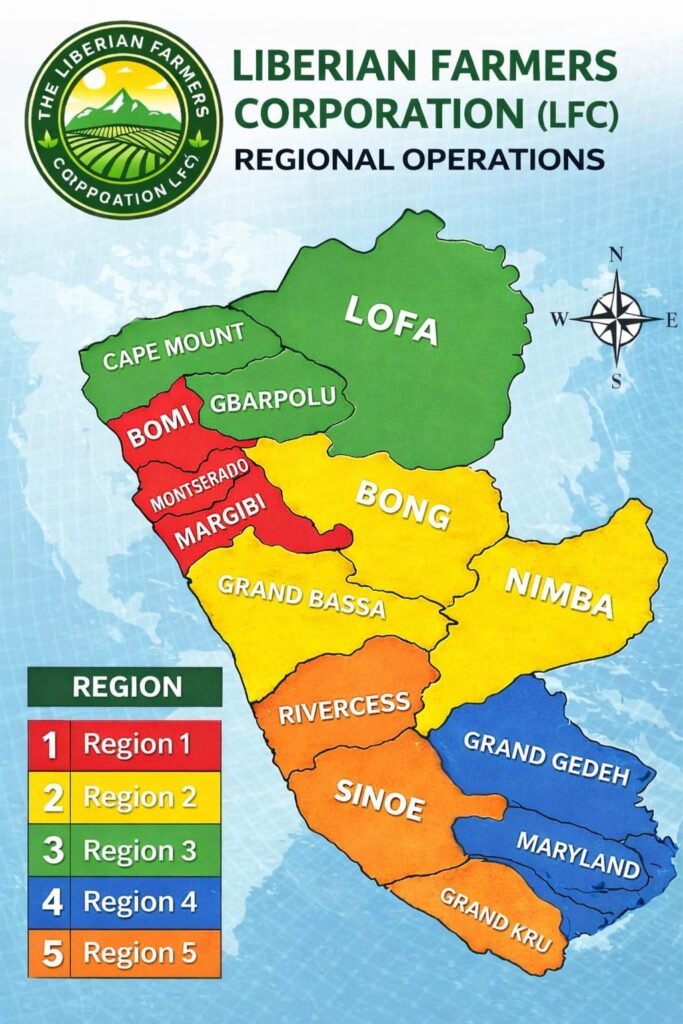
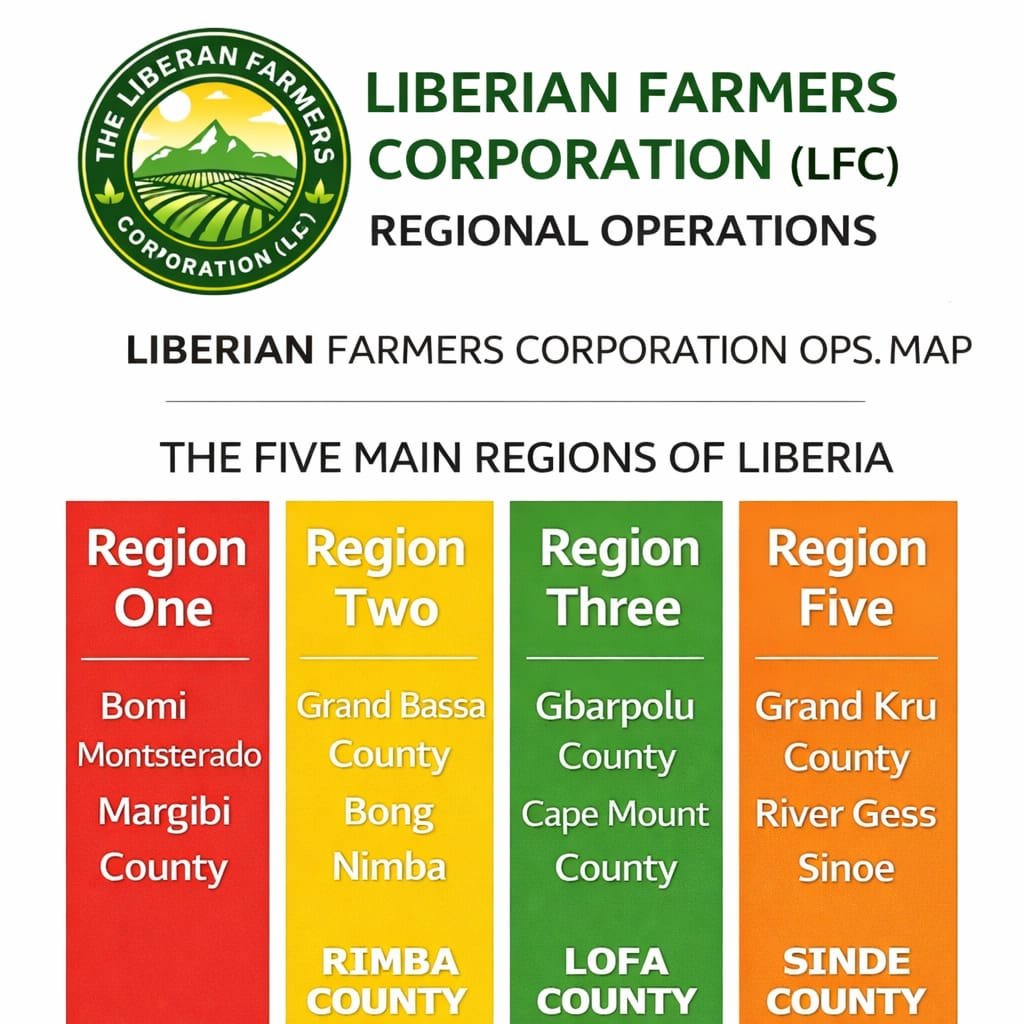
The Liberian Farmers Corporation (LFC) operates across specific geographic corridors designed to maximize Liberia’s diverse agro-ecological potential. Our strategic regional presence is dictated by soil suitability, climate resilience, and proximity to critical trade routes. By decentralizing our operations, LFC ensures that technical expertise and mechanized resources reach the “last mile” of the Liberian farming community.
Primary Focus: Staple Food Sovereignty & Cereal Value Chains
The Northern Region is the engine of Liberia’s food security. LFC’s operations here focus on transitioning subsistence rice and maize farmers into commercial producers.
- Key Interventions:
- Lowland Intensification: Development of Inland Valley Swamps (IVS) for year-round rice production, reducing dependence on rain-fed upland farming.
- Integrated Rice Hubs: Infrastructure investment in industrial-grade parboiling, milling, and destoning facilities to ensure “Made in Liberia” rice meets international quality standards.
- Seed Multiplier Programs: Distribution of climate-resilient, high-yield NERICA seed varieties in partnership with the Central Agricultural Research Institute (CARI).
- Strategic Impact: Reducing the national rice import deficit and stabilizing local market prices. II. The Tree Crop & Export Corridor (Nimba, Grand Gedeh, and River Gee)
Primary Focus: Economic Growth & High-Value Export Commodities
In the hilly and high-rainfall terrains of the East and North-Central regions, LFC prioritizes perennial crops that offer long-term economic stability for farming households.
- Strategic Impact: Enhancing Liberia’s foreign exchange earnings and rural wealth creation. III. The Coastal Horticulture & Logistics Zone (Montserrado, Margibi, and Grand Bassa)
Primary Focus: Urban Market Linkages & Vegetable Value Chains
- Key Interventions:
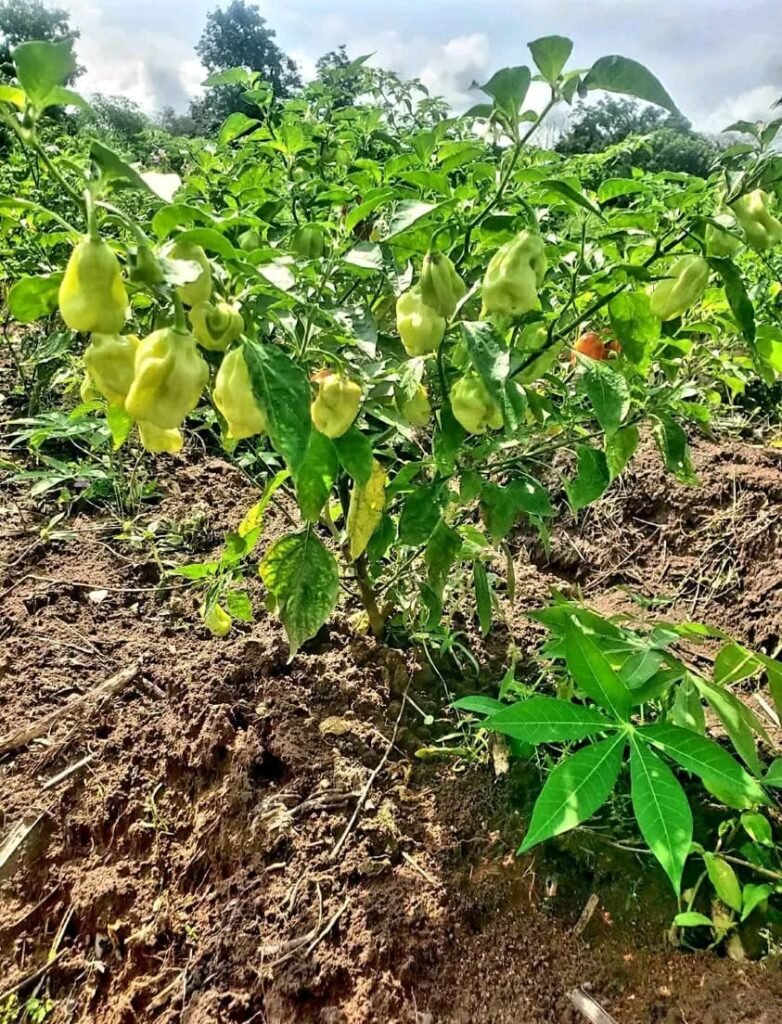
- The “Green Belt” Initiative: Intensive production of “short-cycle” crops (peppers, tomatoes, onions, and legumes) to replace expensive cross-border imports.
- Cold-Chain Infrastructure: Deploying solar-powered refrigeration units at collection points to preserve produce quality from farm gate to urban markets.
- Institutional Off-take Agreements: Facilitating direct contracts between LFC-supported farmer groups and large-scale buyers, including supermarkets, hotels, and concessionaires.
- Strategic Impact: Reducing food waste and creating youth employment in peri-urban agriculture. IV. The South-Eastern Integrated Frontier (Sinoe, Maryland, Grand Kru, and Rivercess)
Primary Focus: Tuber Industrialization & Integrated Farming Systems
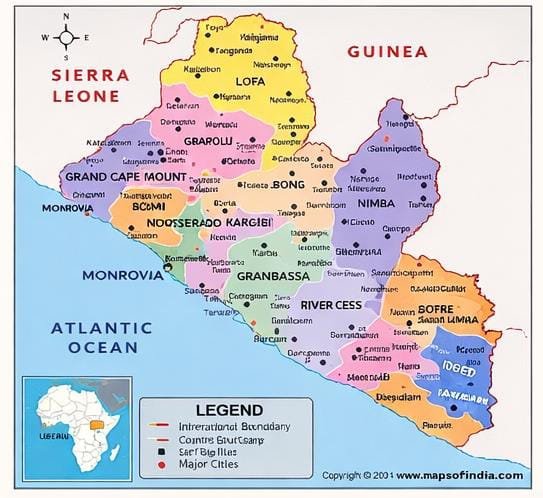
- Key Interventions:
- Cassava Value-Addition: Establishing processing plants for High-Quality Cassava Flour (HQCF), Gari, and industrial starch to ensure farmers have a guaranteed market for their most abundant crop.
- Poultry & Small Ruminant Support: Integrating livestock into farming systems to improve household protein intake and provide organic fertilizer (manure) for crop production.
Fisheries-Agriculture Synergy: Supporting coastal farming communities with integrated approaches that balance land-based agriculture with sustainable artisanal fishing.
- Strategic Impact: Eradicating extreme poverty in remote zones through industrial diversification.
Our Cross-Cutting Strategic Standards
In every region of operation, The Liberian Farmers Corporation (LFC) adheres to three core institutional pillars:
- Climate-Smart Agriculture (CSA): We implement soil conservation, water management, and agroforestry techniques that align with Liberia’s National Adaptation Plan (NAP) to mitigate the effects of climate change.
- Gender & Youth Inclusion: Recognizing that women lead 60% of agricultural labor in Liberia, the LFC mandates that at least 40% of all regional leadership positions and resource allocations are directed toward women and youth-led cooperatives.
- Digital Extension Services: LFC utilizes mobile technology to provide farmers in every strategic region with real-time market data, weather forecasts, and agronomic advice, bridging the information gap for rural producers.
Transparency & Regional Partnership
The LFC works in close coordination with the Ministry of Agriculture (MoA) and international partners including the FAO, UNDP, and IFAD. We invite donors, stakeholders, and private investors to explore our regional projects.
For detailed regional data, impact reports, or to visit our field operations, please contact our National Operations Center in Monrovia.
The Liberian Farmers Corporation (LFC)
Rooted in the Soil, Committed to the Farmer.